May 2026 · 14 min read
A Journey Across Three Worlds
Singapore, an Azamara cruise south, Sydney for New Year, and Pearl Harbor
- Travelled
- Dec 2025 – Jan 2026
- Chapters
- 5
- Countries
- Singapore, Australia, USA
- Written by
- Bob Boles
From the glittering gardens of the Lion City to the solemn stillness of Pearl Harbor, this was a voyage that kept changing what it asked of us. Three countries, one ship, and a New Year counted down from the water.
- Singapore
- Azamara cruise
- Sydney and Melbourne
- Honolulu, Hawaii
Chapter One
Singapore · The beginning
The Lion City roars
Sentosa, the Marina Bay Sands, Gardens by the Bay
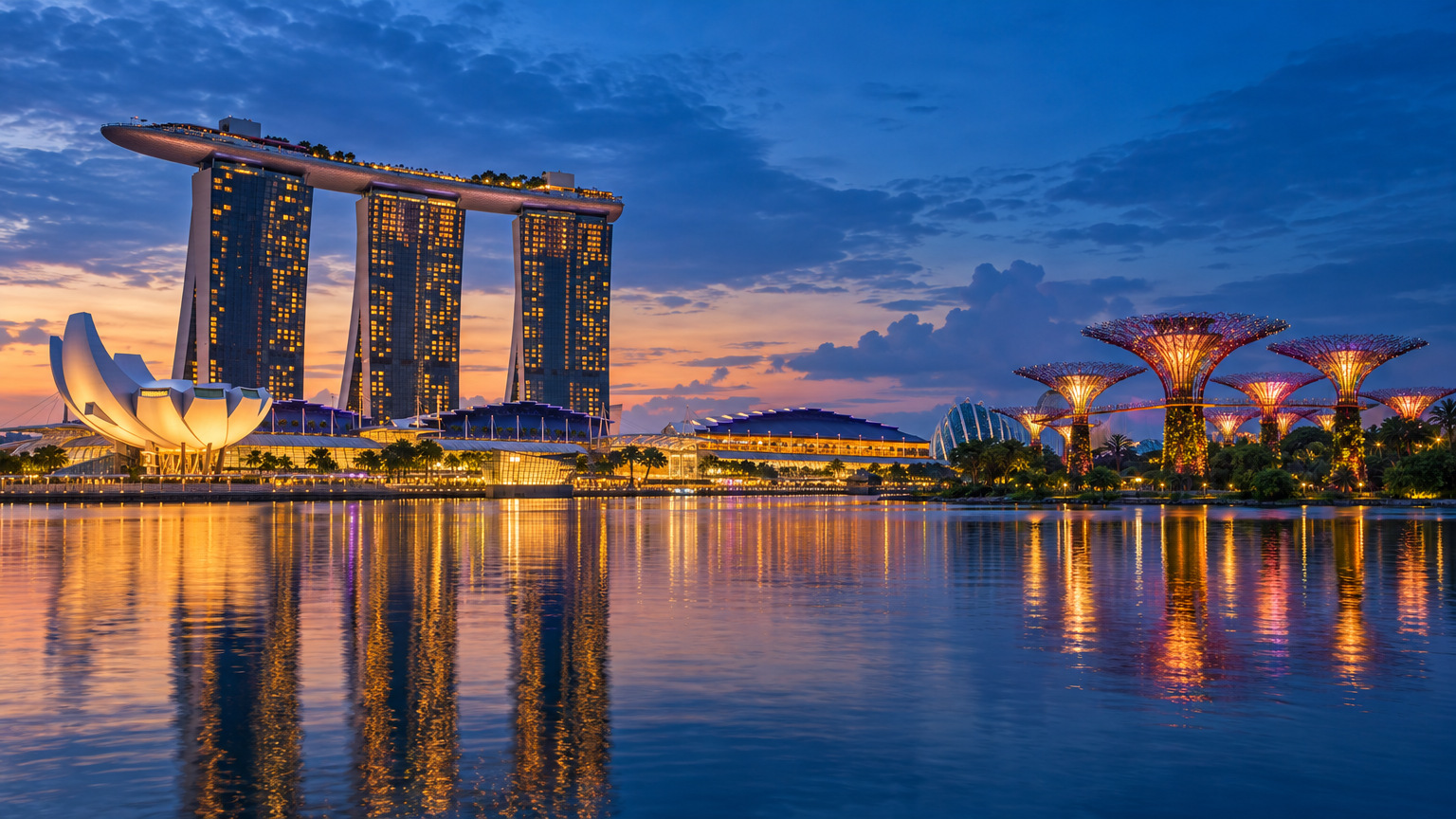
There is no gentle easing into Singapore. The city demands your full attention from the moment the plane descends and the improbable skyline comes into view: towers spiking upward through equatorial haze, the double helix of the Marina Bay Sands gleaming like something imagined by a science fiction author with a very generous budget.
We arrived jet-lagged but buzzing, the heat wrapping around us like a warm towel the instant we stepped outside Changi Airport, consistently ranked among the world's finest and for good reason. The Jewel, the airport's indoor garden complex anchored by a 40 metre indoor waterfall, was our first reminder that Singapore treats infrastructure as an art form.
Singapore exists in a permanent state of becoming. Always building, always refining, always reaching for something just beyond its grasp, and usually catching it.
Gardens by the Bay stopped us cold. The Supertrees, towering vertical gardens that glow at night in choreographed light shows, are the kind of spectacle you assume must be slightly disappointing in person. They are not. Standing beneath them at dusk as the colours shifted across their canopies, we felt the particular joy of a world exceeding expectation.
Taste of Singapore
No visit is complete without a hawker centre meal. We settled onto plastic stools at Maxwell Food Centre in Chinatown and surrendered to char kway teow, Hainanese chicken rice and chilli crab, the latter arriving in a wok so large it seemed to have its own weather system. Under ten dollars. Utterly magnificent.
We wandered through Chinatown and Little India, through the shophouse-lined streets of Kampong Glam, and along the elevated walkways of the Central Business District. Singapore is many cities layered atop one another, each distinct, each immaculate, all somehow cohesive. It is the rare place that makes a traveller feel both stimulated and completely safe, a combination more unusual than it should be.
Chapter Two
At sea · Azamara voyage
Sailing south
Singapore to Melbourne, across the South Pacific
We boarded at the port of Singapore as the afternoon sun turned the harbour to hammered copper. Azamara occupies a particular sweet spot in the cruising world: intimate ships that go where the mega-ships cannot, with a style that leans toward the boutique rather than the blockbuster.
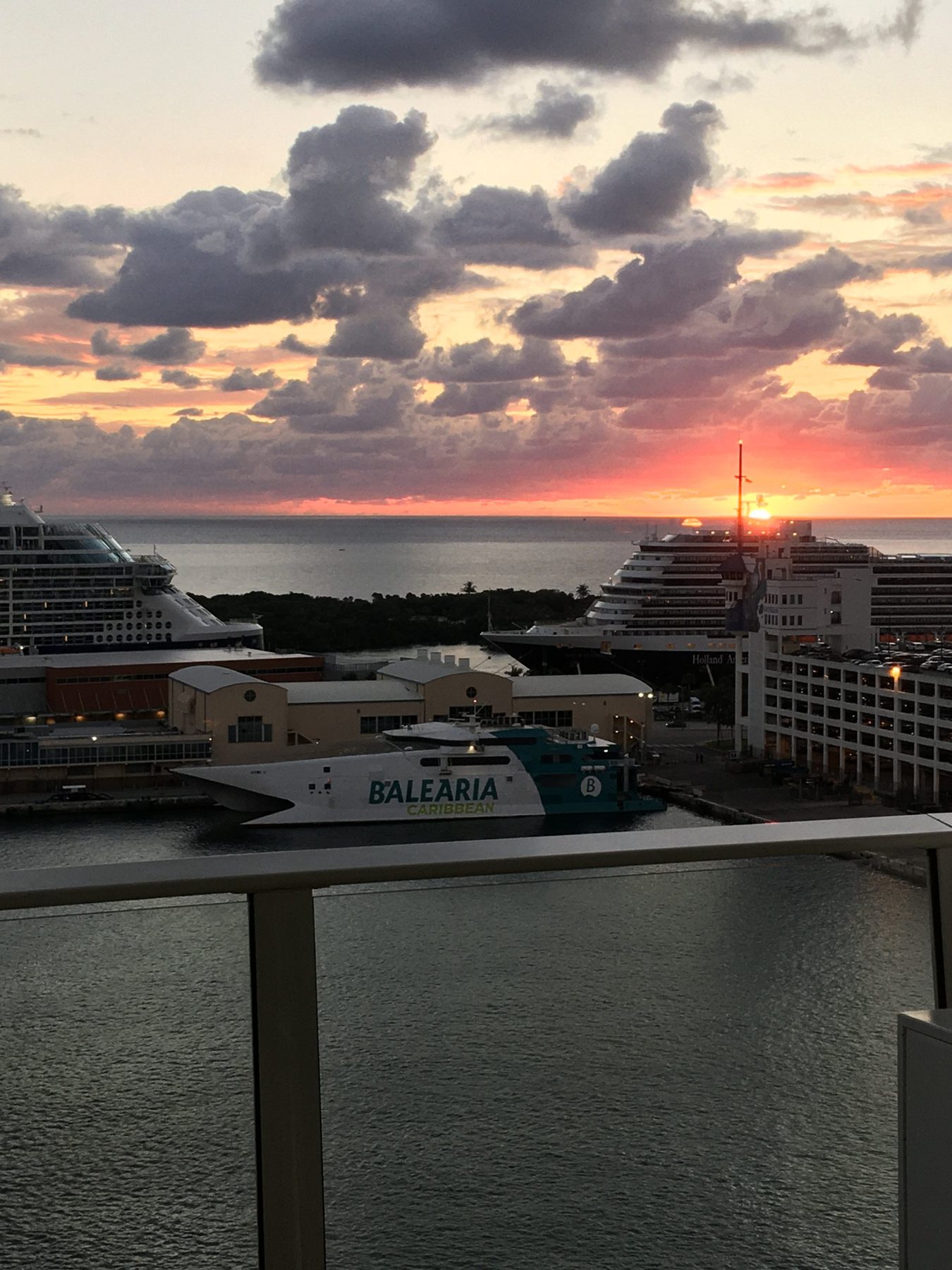
The first days settled into a glorious rhythm: mornings on the open deck watching flying fish skim the swells, afternoons with books and cold drinks, evenings in the Discoveries Restaurant as the sun descended into the Tasman Sea. The ocean, out here, is a reminder of the planet's true proportions. Enormous, indifferent, and staggeringly beautiful.
Life aboard Azamara
One of Azamara's signatures is the AzAmazing Evenings programme, exclusive shore-side events arranged for guests. On this voyage it was an evening with Jim Morrison, an outstanding Australian musician, in the Adelaide Opera House, a grand old fixture downtown. Two of his sons played alongside him, and the combined talent made it a night to remember.
As we sailed south and the latitude climbed, the air shifted from the tropical thickness of equatorial waters to something cooler and crisper. The ocean changed colour too, deepening from the turquoise of the tropics to a serious steel-blue grey. We were heading for Australia now, and the continent announced itself in the weather before we ever saw the coast.
Stops along the way offered their own gifts: remote ports, early morning anchorages, the particular quiet of arriving somewhere by sea rather than by air. That gradual approach, the skyline assembling itself on the horizon, is something airports have entirely stolen from us. Arriving by ship restores the sense of distance, of journey, that modern travel tends to compress into nothing.
Chapter Three
Sydney · New Year's Eve
Midnight over the Harbour Bridge
Sydney Harbour, New South Wales
To ring in the New Year from Sydney Harbour is to take part in one of the world's great communal rituals, and doing it from the deck of a ship at anchor is perhaps the finest seat in the house. Azamara gave us two overnights in the harbour, the ship positioned with the Harbour Bridge and Opera House arrayed before us like a stage set someone had gone considerably over budget designing.
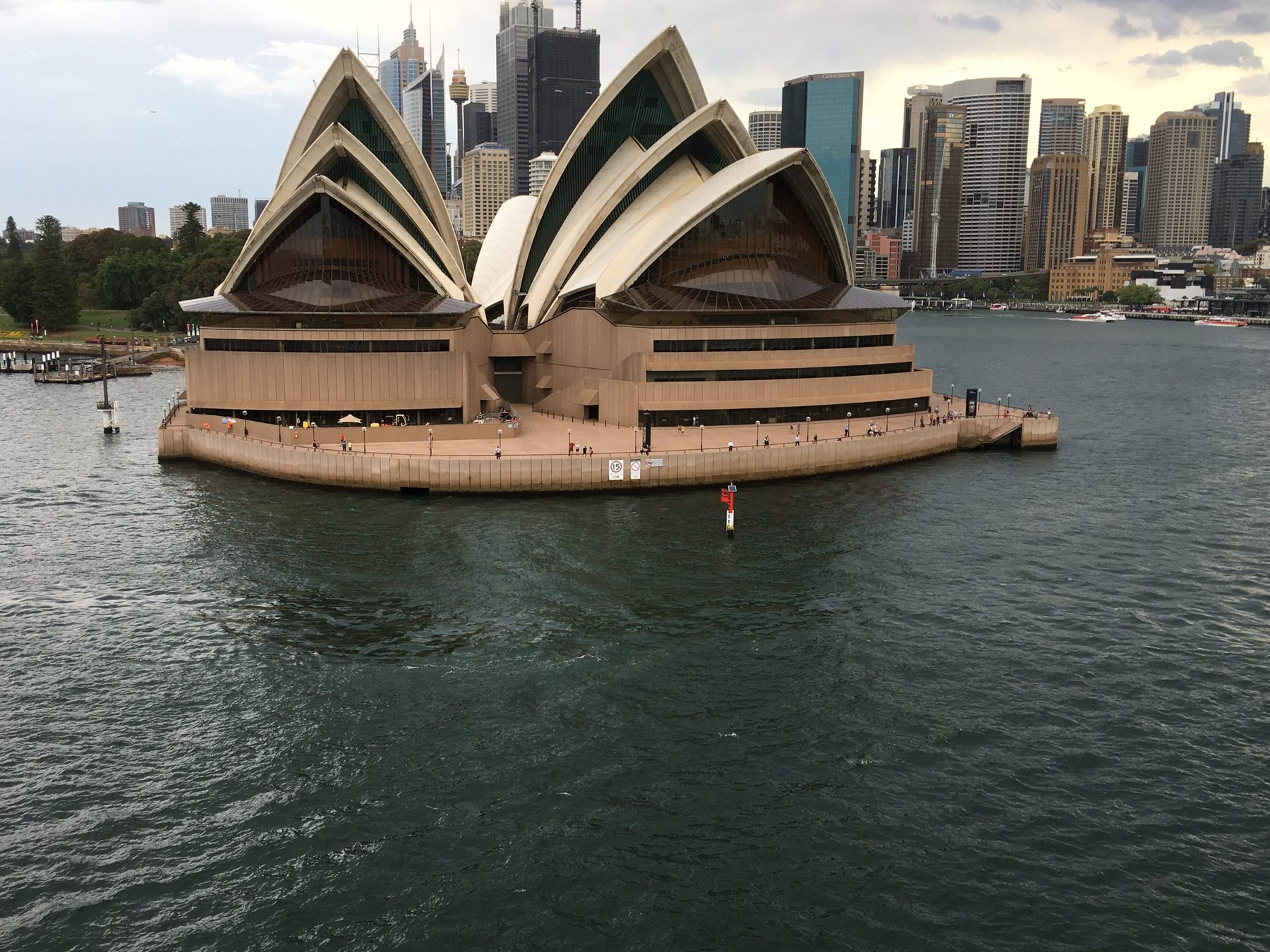
The day before New Year's Eve we went ashore and climbed through the Rocks, the sandstone neighbourhood at the harbour's edge where convict-cut stone walls still show the chisel marks, before making our way to the Opera House to admire Jørn Utzon's extraordinary shells up close.
At the stroke of midnight the Harbour Bridge simply erupted. Not so much an explosion as a sustained act of joy, the entire arch outlined in fire, cascades of silver and gold tumbling into the black water below.
New Year's Eve itself began long before midnight. We dressed for the occasion and claimed a spot on the upper deck as the harbour filled with ferries, sailing boats and launches, all drawn toward that bridge like iron filings to a magnet. Sydney's 9pm family fireworks lit the sky in great chrysanthemum blooms, and the crowd around the harbour sent up a roar that travelled across the water to where we stood.
Midnight arrived with the full weight of anticipation. And then the bridge delivered: twenty minutes of fireworks launched from the bridge itself, from barges in the harbour and from rooftops across the city. We stood there with champagne, entirely undone by it. Some moments need no description. They simply need to be present for.
Why the ship is the best seat
Watching Sydney's fireworks from land means staking out a spot at dawn and defending it for fifteen hours. From the ship we walked upstairs at 11:30pm with drinks in hand. The water view, the unobstructed sightlines and the freedom to move made it the only way we would want to do this night again.
Chapter Four
Melbourne · Journey's end
The southern capital
Melbourne, Victoria
The cruise concluded in Melbourne, a city that pursues its rivalry with Sydney with enormous energy and considerable justification. Where Sydney has the harbour and the Opera House, Melbourne has its laneways: narrow, graffiti-layered passages curling between the Victorian-era grid, packed with espresso bars, independent bookshops and galleries that do not announce themselves from the street.
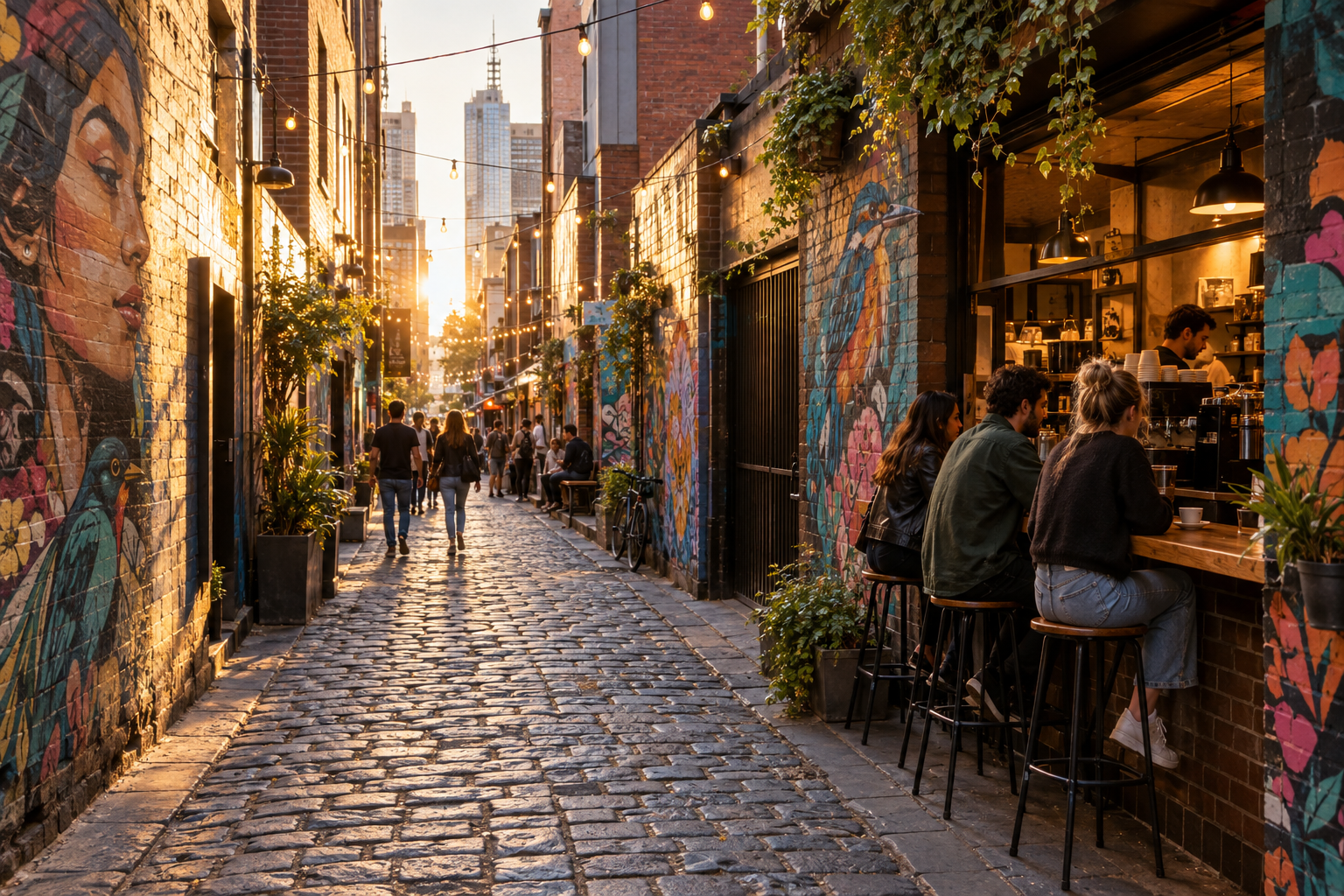
We wandered Hosier Lane and its celebrated street art, drank coffee that made other coffee seem inadequate, and took the tram to the National Gallery of Victoria, the country's oldest and largest art museum, which makes the city feel culturally substantial in a way visitors sometimes do not expect from Australia.
Melbourne's great gift to the world
The coffee culture is genuinely not overstated. The flat white was arguably perfected here, and the laneway cafés take their craft with a seriousness that borders, delightfully, on the religious. We became temporary converts. The city also claims the world's largest tram network, and riding it through the CBD felt like taking part in something pleasantly old-fashioned.
The Queen Victoria Market on a Saturday morning, the botanical gardens beside the Yarra, the strange fractured geometry of Federation Square: Melbourne rewards the slow walker, the person willing to turn down an unmarked alley to see what is there. Usually, something excellent.
Chapter Five
Pearl Harbor, Oahu · A moment of stillness
The Arizona, at rest
Pearl Harbor, Oahu, Hawaii
Hawaii arrived as a different kind of journey entirely. After the exuberance of Singapore and the celebration of Sydney, Pearl Harbor asked something else of us: a slowing down, a quieting. We drove through Honolulu in morning light and followed the signs to the harbour, where the National Park Service runs the USS Arizona Memorial with a solemnity entirely appropriate to what happened here.
On 7 December 1941, a Sunday morning not unlike this one, Japanese aircraft attacked the United States Naval Station at Pearl Harbor. The USS Arizona was struck by an armour-piercing bomb that detonated her forward ammunition magazine. She sank in minutes. Of the 1,177 sailors and Marines aboard, 1,102 were lost, many of them still entombed within her hull, which rests on the harbour floor to this day.
You are asked to remove your hat. You are asked to speak quietly. Standing over the white marble memorial, looking down through the water at the rusting hull below, you do not need to be asked to feel the weight of what happened here.
The memorial itself, a white concrete structure that spans the sunken hull without touching it, designed by Alfred Preis, is reached by a Navy boat from the visitor centre. The crossing takes only minutes, but it functions as a transition. By the time you step off the boat and onto the memorial's open deck, something has shifted in you. This is sacred ground of a secular kind, and it asks to be treated as such.
Inside the shrine room, a marble wall bears the names of those who died. Many visitors leave in silence. We did too, walking back out into the Hawaiian sunlight with new eyes for it, grateful for the light, the warmth, the ordinary privilege of a day those 1,102 sailors never got to have.
Practical note for visitors
Reserve USS Arizona Memorial tickets well in advance through the National Park Service. They are free but limited and fill quickly. Arrive early: the short documentary shown before the boat crossing provides essential context and should not be skipped. The wider memorial complex also includes exhibits on the Pacific War and a museum worth your time.
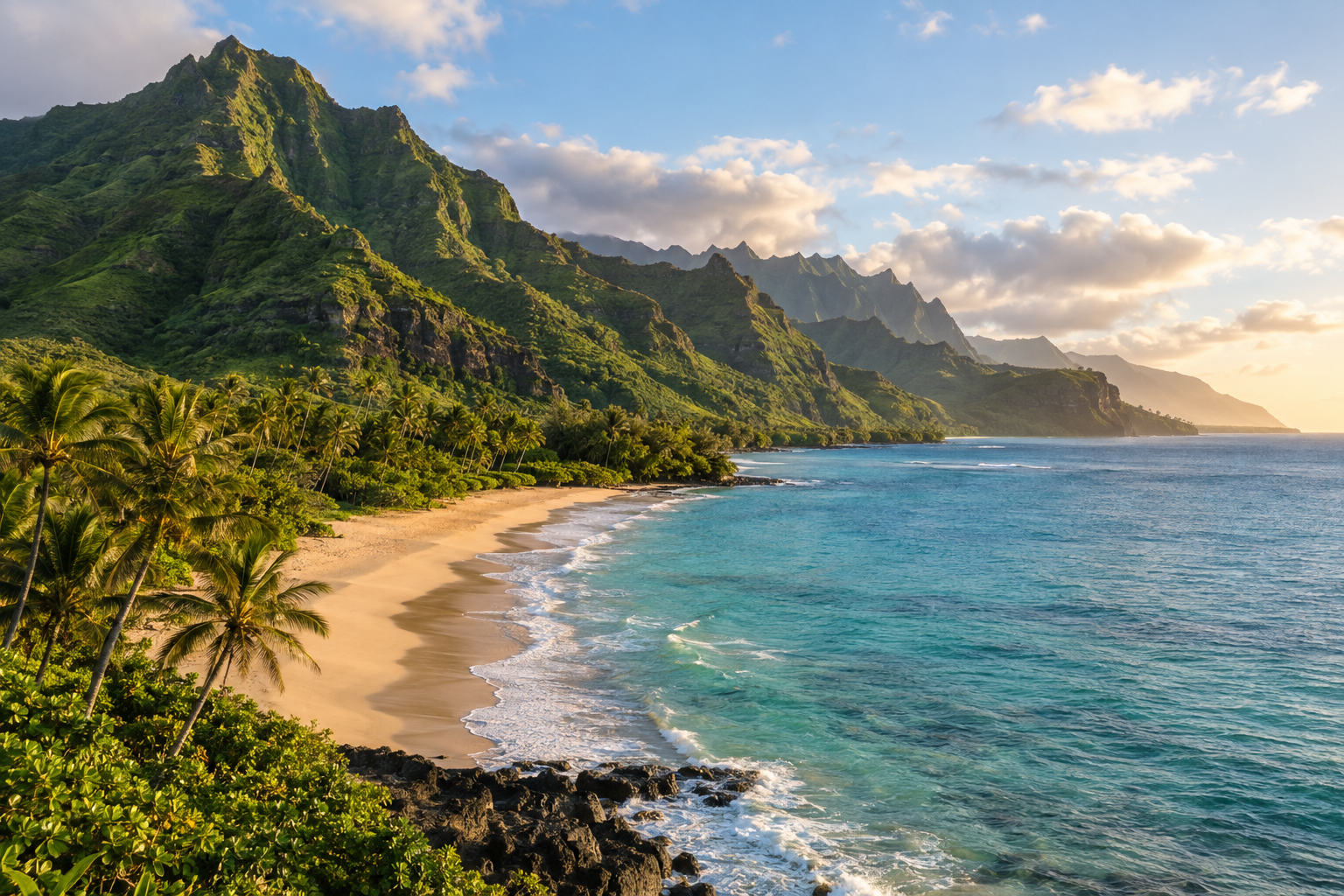
The rest of Oahu offered the expected delights: the curved beach at Waikiki at sunrise before the crowds arrive, shave ice from a roadside stand, the volcanic ridgeline of Diamond Head seen from the water. We snorkelled at Hanauma Bay, where the fish swim close enough to inspect, and watched the surfers on the North Shore ride waves that seemed to have personal grievances. Two climates sharing a single small island, which seemed, by the end, like an apt metaphor for the whole journey.
Afterword
What travel gives, and what it asks
From Singapore's Supertrees to the fireworks over the Harbour Bridge, from the laneways of Melbourne to the still water above a sunken ship in Pearl Harbor, this was a journey that asked us to hold wonder and grief, celebration and reflection, all at once. Which is, in the end, what the best travel always does. It shows us how large the world is. It shows us how briefly we are in it. And it sends us home with something harder to lose than a souvenir.