November 2026 · 12 min read
Ireland intensive on Azamara
Dublin to Portsmouth around a wet, green island, then three nights in London
- Sailing
- Flew Sept 2026
- Route
- Fort Lauderdale to Barcelona
- Cabin
- Inside, booked late
- Written by
- Bob Boles
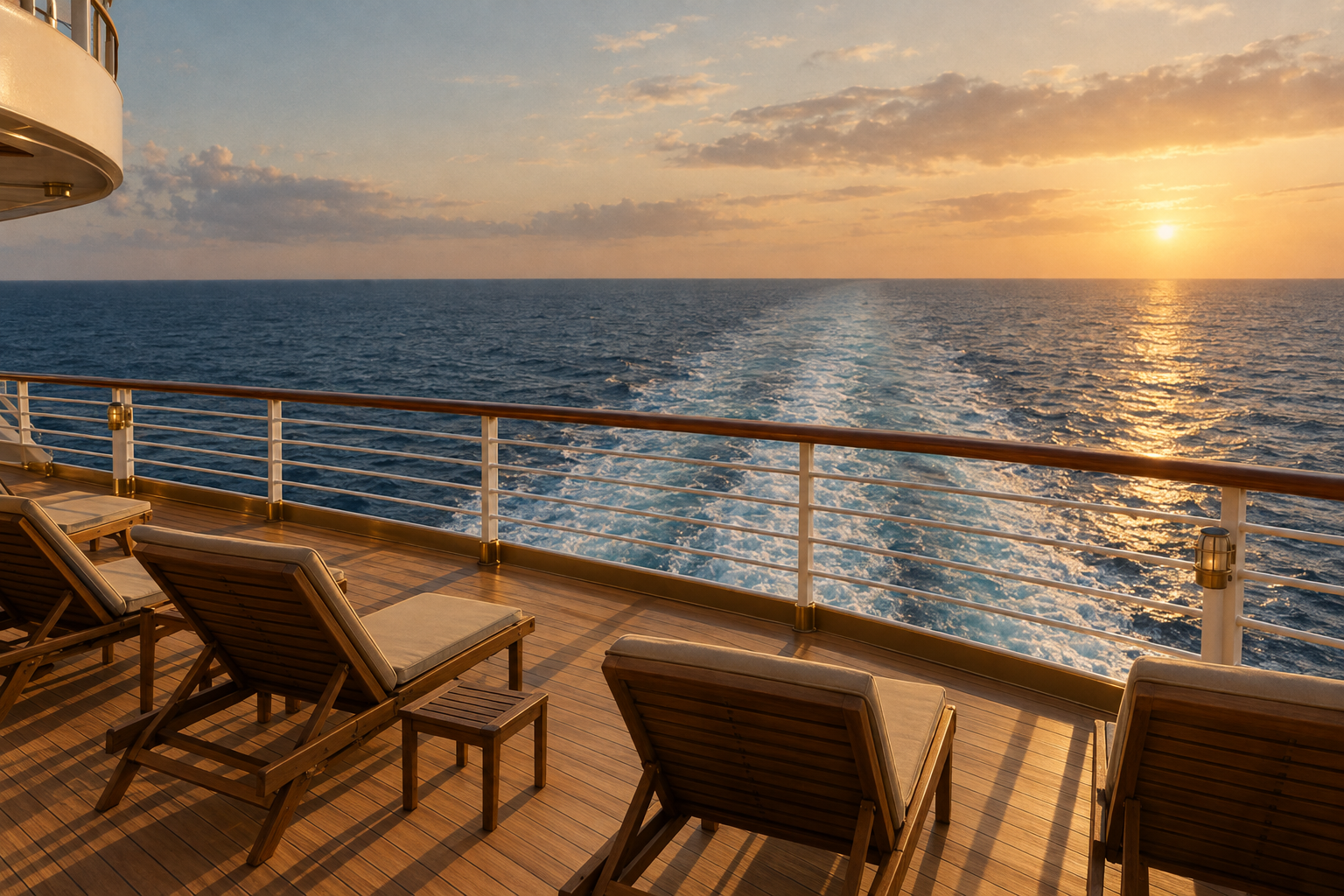
Twice a year the cruise industry performs a slow, expensive migration. Ships leave the Mediterranean for the Caribbean, or Alaska for Hawaii, or Australia for the Pacific Northwest, and they have to get there somehow. Those journeys are called repositioning sailings, and they are the cheapest nights at sea you will ever buy.
- Repositioning
- Transatlantic
- Value
- One way
Part One
The idea
What a repositioning cruise actually is
A ship moving house, with passengers aboard
Cruise lines follow the weather. Summer in the Mediterranean, winter in the Caribbean, Alaska in the middle months, Australia over their summer. Between those seasons the ship has to sail from one region to another, and the line has two choices: sail empty, or sell the crossing.
They sell it, at a discount, because a cabin with a paying passenger in it is better than an empty one. The result is a one-way voyage of a week to three weeks, usually with a handful of ports at either end and a long stretch of open water in the middle.
Where they happen
The classic is the transatlantic: Florida or New York to the Mediterranean in spring, and back in autumn. There are also Pacific crossings, Panama Canal moves between the Caribbean and the west coast, and the Alaska shuffle from Seattle or Vancouver to Hawaii.
Part Two
The economics
Why they are so cheap
Nobody is fighting you for a cabin
Three things push the price down at once. The sailing is one way, which most people cannot use because they would have to buy a flight home from a different city. It has few ports, so there is no brochure list of seven countries in seven days to sell. And it happens in shoulder season, when demand for the region is softest.
Put those together and you get a nightly rate that makes no sense next to a seven night Caribbean loop. We have seen inside cabins on a 14 night crossing advertised below what a mid-range hotel charges for bed and breakfast in a European city.
A repositioning cruise is the only holiday we book where the per-night cost of the cabin is lower than the per-night cost of staying home.
Part Three
The numbers
The maths, including the flight
What our crossing cost per night
The fare is only half the calculation. A one-way cruise means a one-way flight at each end, and that is where the apparent bargain can disappear. We price the whole thing: cabin, taxes, gratuities, the two flights, and a night in a hotel before boarding.
| Item | Cost per person | Note |
|---|---|---|
| Cabin, 14 nights | about $1,250 | Inside, booked three months out |
| Taxes and port fees | about $180 | Included in the quoted fare |
| Gratuities | about $250 | Automatic, per day |
| Flight out | about $140 | Domestic, booked on points |
| Flight home | about $95 | One way, Barcelona to the east coast |
| All in, per night | about $137 | Fourteen nights, everything counted |
At about 137 dollars a night all in, with three meals, a cabin, entertainment and a different view every morning, that is not a splurge. It is cheaper than the hotel we would have booked in Florida for the same fortnight, and it moved us to Europe at the end of it.
The comparison that matters
Compare a repositioning cruise to the same number of nights in one city, not to another cruise. Against a seven night loop with four ports, it loses on sightseeing and wins on cost and quiet.
Part Four
How to find them
Spotting a good one
Five things we check before booking
- 01The direction. Westbound transatlantics in autumn and eastbound in spring are usually the cheapest, because the eastbound crossing is shorter in days.
- 02The sea days. Six or seven in a row is normal. If you do not enjoy a ship with nothing to do but read, this is not your product.
- 03The cabin category. Inside cabins on crossings are the value play. A balcony is lovely on day two and a wind tunnel on day five.
- 04The flight home. Price a one-way ticket from the arrival port before you fall in love with the fare.
- 05The month. A November crossing can be rough. We watch the weather patterns for the route, not just the price.
The single best signal is a sailing that is not in the brochure. If a ship appears on a route it does not normally sail, in a month that is not its season, it is almost certainly a repositioning, and the pricing will reflect that.
Part Five
The honest part
The trade-offs
What you give up for the price
Fewer ports means fewer photographs of old towns. A crossing is not a tour, it is a voyage. We had three ports in fourteen days, and two of them were at the ends.
Weather is the other cost. Shoulder season means the chance of a grey, rolling Atlantic, and a ship that moves. If you are prone to seasickness, a transatlantic in November is an expensive way to find out. We pack medication, choose a mid-ship cabin, and accept that one or two days will be spent horizontal.
Entertainment is thinner, too. With six sea days in a row the cruise director has to fill them, and the schedule can feel like a rotation of the same three activities. We treat it as a reading holiday with dinner included, which suits us.
If you need a new port every morning, do not book a crossing. If you want two weeks of ocean and a reason to finish a book, it is the best value at sea.
Part Six
Logistics
Getting home from the other side
The one-way problem
One-way flights are the hidden cost of every repositioning cruise, and they are usually worse value than a return. Two ways around it: book the return leg with points, or book a cheap one-way on a low cost carrier within Europe and connect home from a hub.
We do both. The flight out was a domestic award, the flight home was a discounted one-way booked the week it went on sale. Total cash outlay for transport was under 250 dollars each, which kept the per-night maths honest.
Buffer day
Always add a night before the cruise. A delayed flight that makes you miss the sailing is the one mistake this hobby does not forgive, and the ship will not wait.
Part Seven
Our sailing
The crossing we took
Fort Lauderdale to Barcelona, fourteen nights
Ours left Fort Lauderdale in late autumn with a full day in Bermuda and a stop in the Azores, then six nights of open Atlantic before Lisbon. Barcelona at dawn on the last morning, with the city still quiet and the decks empty, is one of those travel memories that costs nothing and stays.
We booked three months out, which is late for a crossing and about right for the price. Earlier is not always cheaper on these sailings, because the line is still hoping to sell the cabins at a higher rate. Watching the fare for a few weeks and booking when it dips has worked for us twice.
The same logic is why our next European plan starts with a one-way sailing into Barcelona rather than a return flight. Once you have crossed an ocean at that price, paying for a return ticket feels like a waste.
Part Eight
Copy this
How to book one
The short checklist
- 01Search one-way sailings rather than round trips. Most cruise search sites let you filter to repositioning itineraries.
- 02Pick the month the ships move: April to May and October to November for the Atlantic.
- 03Price the one-way flight from the arrival port before booking the cabin.
- 04Choose an inside cabin unless the crossing is in the tropics. You will not use the balcony.
- 05Add a hotel night before boarding, and book your gratuities into the budget from the start.
- 06Watch the fare for two to three weeks and book when it dips. Do not wait for the last minute on a cabin you actually want.
That is the trick, and it is barely a trick at all. The ships have to move. Somebody has to be on them. If you are willing to be that somebody, in shoulder season, with a good book and a one-way ticket home, you can cross an ocean for less than a fortnight at home.